
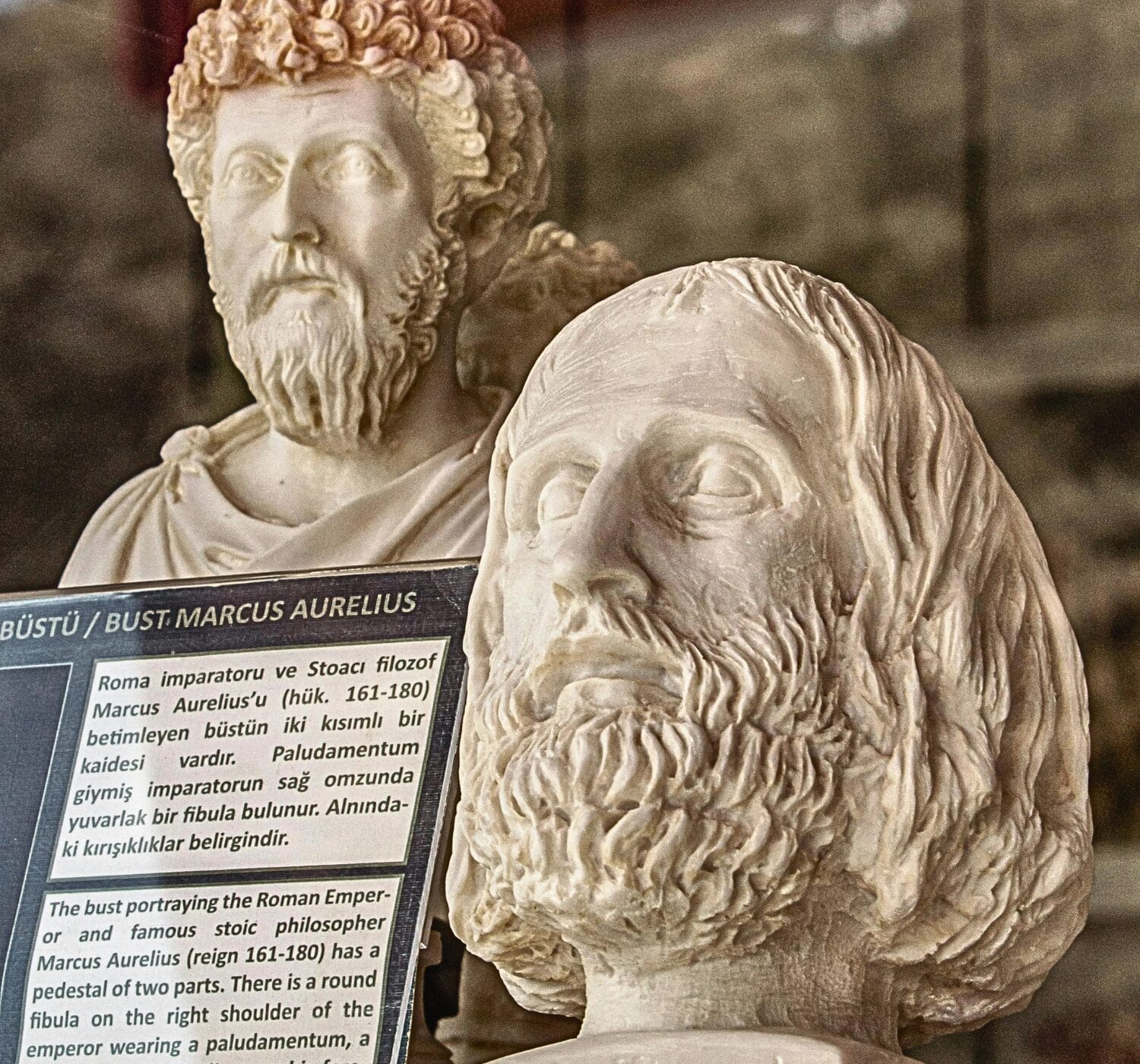
This chapter-by-chapter summary of Meditations breaks down the book’s biggest lessons on stress, discipline, emotional control, and finding meaning in everyday life. A simple, modern guide to why the reflections of Marcus Aurelius still feel surprisingly relevant in today’s world of distraction, burnout, and constant noise.
May 26, 2026 | The Unscripted Femme
Written nearly 2,000 years ago by Roman emperor Marcus Aurelius, Meditations was never meant to be published. It was his private journal — a space where he worked through pressure, responsibility, stress, and the challenge of staying mentally steady in a demanding life.
What makes it so timeless is how familiar it still feels today. Anxiety, overthinking, ego, distraction, procrastination, and emotional reactivity are all things people still struggle with now.
This breakdown walks through each book in a simple, easy-to-follow way while highlighting the modern lessons inside Stoic philosophy.
While this guide focuses on summarizing each section, I also put together a more modern interpretation of the book that explores how you can apply Marcus Aurelius’s ideas to everyday life and real situations like anxiety, distraction, emotional resilience, discipline, relationships, and intentional living. You can read that here: Meditations by Marcus Aurelius: What This Ancient Book Teaches Us About Modern Life.
In This Article: Meditations by Marcus Aurelius Explained
Book 1 — Gratitude, Influence, and Character
The first book is very different from the rest of Meditations. Instead of discussing philosophy directly, Marcus Aurelius reflects on the people who shaped his character and the lessons he learned from them. It reads almost like a quiet thank-you list.
He writes about learning calmness from one person, humility from another, discipline from another, and patience from someone else. He admires people who were emotionally steady, honest, modest, hardworking, and self-controlled. Rather than praising wealth or status, Marcus consistently values inner qualities.
One thing that stands out is how seriously he took observation. He believed wisdom came partly from paying close attention to how good people behaved in ordinary situations. He also admired simplicity. Several times he praises people who avoided arrogance, luxury, gossip, or showing off.
A few specific ideas from this section:
- He respected people who stayed calm under pressure.
- He admired those who spoke clearly and honestly without trying to impress others.
- He valued self-discipline more than talent or intelligence.
- He believed kindness and fairness revealed true strength.
This section quietly introduces one of the book’s biggest themes:
character matters more than appearance, power, or recognition.
Book 2 — Life Is Short, and People Will Be Difficult
Book 2 begins with one of the most famous passages in the entire book. Marcus reminds himself that every day he will encounter:
- selfish people,
- rude people,
- dishonest people,
- jealous people,
- arrogant people.
But instead of becoming angry, he tells himself these people behave badly because they don’t truly understand good from evil. He believes becoming bitter only harms your own peace of mind.
Throughout this section, Marcus reflects heavily on mortality. He constantly reminds himself how temporary life is and how quickly time disappears. Rather than using this idea in a depressing way, he uses it to push himself toward better living.
He repeatedly tells himself:
- stop procrastinating,
- stop wasting energy on meaningless things,
- stop living as though you have endless time.
One major Stoic idea appears here:
You cannot always control what happens, but you can control your response.
Marcus also reflects on how humans are naturally connected. He compares people to parts of the same body that are meant to work together. Even difficult people are still part of humanity.
Specific ideas from this section:
- Anger usually damages the angry person most.
- Most people spend too much time distracted by trivial concerns.
- You should focus on doing the right thing quietly.
- Death is natural and should not control your life through fear.
This section feels surprisingly modern because so much of it deals with stress, emotional reactions, frustration, and distraction.
Related: If you’re trying to live a little more intentionally in everyday life, you might also like my guide on intentional living and learning more about mindfulness.

Book 3 — Protect Your Attention and Live Intentionally
Book 3 focuses heavily on attention, purpose, and the importance of living consciously. Marcus repeatedly warns himself not to drift through life distracted by gossip, entertainment, vanity, or meaningless activity.
He believed that many people waste their lives because they never stop to think about how they are spending their time. He reminds himself to stay mentally disciplined and avoid letting his mind become scattered.
Marcus also returns to the idea of mortality. He reflects on how quickly youth, beauty, fame, and even entire lives disappear. This motivates him to focus on what truly matters instead of chasing approval or temporary pleasures.
One of the strongest themes here is integrity. Marcus wants his inner values and outward behavior to match. He dislikes performative goodness or pretending to be wise while living carelessly.
Specific points from Book 3:
- Your mind becomes shaped by what you repeatedly focus on.
- Avoid complaining unnecessarily.
- Live in a way that would make you proud if today were your last day.
- Don’t become consumed by what others think about you.
Marcus also emphasizes simplicity. He admires people who live honestly without needing constant recognition or luxury.
The overall feeling of this section is:
stop sleepwalking through life and start living deliberately.
Book 4 — Your Perspective Creates Much of Your Experience
Book 4 contains some of the clearest Stoic philosophy in the book. Marcus repeatedly explores how thoughts shape emotions and how perspective can either calm the mind or intensify suffering.
He argues that many things people fear are not inherently terrible. Instead, suffering often comes from the judgments people attach to events. For example, embarrassment, criticism, setbacks, or inconvenience only become overwhelming when the mind magnifies them.
Marcus also spends a great deal of time reflecting on impermanence. He reminds himself that:
- fame disappears,
- wealth disappears,
- powerful people die,
- entire civilizations vanish over time.
This perspective helps him detach from ego and external validation.
A few important ideas from this section:
- Your thoughts can disturb you more than reality itself.
- Most things people obsess over are temporary.
- Human life is extremely brief when viewed from a larger perspective.
- Peace comes from managing your inner world.
Marcus often encourages himself to step back mentally and see problems from a wider angle. He believed this reduced emotional overreaction.
The emotional tone of Book 4 feels calm, reflective, and almost therapeutic.

Book 5 — Discipline, Resistance, and Responsibility
Book 5 is one of the most relatable sections because Marcus openly struggles with laziness, comfort, and resistance. He writes about not wanting to get out of bed and needing to remind himself that he has responsibilities as a human being.
He argues that people are naturally meant to work, contribute, and participate in life rather than endlessly seeking comfort. He compares humans to bees or ants fulfilling their role within a larger system.
Marcus becomes frustrated with his own tendency to avoid discomfort. He pushes himself to stop complaining and simply do what needs to be done.
Specific ideas from this section:
- Comfort should not become the goal of life.
- Discipline is necessary for a meaningful existence.
- Complaining wastes energy that could be used for action.
- Humans grow through effort and responsibility.
He also reflects on the danger of overindulgence and distraction. Marcus worries about becoming mentally weak through excessive comfort.
One of the strongest messages in this section is:
stop waiting to “feel like it” before doing what matters.
That idea alone makes this section feel incredibly relevant today.
Related: A lot of Marcus’ ideas about slowing down and simplifying life connect closely with burnout and mental overload in modern life.
Book 6 — Human Nature, Cooperation, and Emotional Control
In Book 6, Marcus Aurelius reflects deeply on how humans behave and how easily emotions like anger, pride, jealousy, and frustration can take over. He constantly reminds himself that people are imperfect by nature and that expecting perfection from others only creates disappointment.
Rather than becoming cynical, Marcus believes people are meant to cooperate. He compares humanity to parts of one body working together. Even when people behave badly, he encourages himself not to respond with cruelty or bitterness.
A major idea in this section is emotional self-control. Marcus believes losing your temper harms your own peace more than anyone else’s. He repeatedly pushes himself to stay calm, rational, and grounded even in difficult situations.
Specific ideas from Book 6:
- Most people act from ignorance, fear, or selfishness rather than true malice.
- Becoming angry at human nature is pointless because flaws are part of humanity.
- Your mind should not be controlled by other people’s behavior.
- A calm response is stronger than an emotional reaction.
Marcus also reflects on simplicity and avoiding unnecessary luxury. He admired people who lived modestly and focused on character rather than appearances.
The overall feeling of this section is:
understand people without letting them disturb your peace.
Book 7 — Inner Peace and Mental Discipline
Book 7 focuses heavily on inner calmness and training the mind. Marcus repeatedly reminds himself that peace does not come from controlling the outside world but from controlling his reactions and thoughts.
He reflects on how quickly emotions can spiral when people allow anger, fear, anxiety, or overthinking to dominate their minds. Marcus believes that many forms of suffering are made worse when the mind constantly replays problems or imagines worst-case scenarios.
Throughout this section, he practices mentally stepping back from situations to see them more clearly and rationally. He encourages himself to simplify problems instead of emotionally dramatizing them.
Specific ideas from Book 7:
- Your mind becomes disturbed when it loses perspective.
- External events cannot destroy inner peace unless you allow them to.
- Most fears shrink when viewed calmly and logically.
- Living according to reason creates stability.
Marcus also returns to the theme of impermanence. He reminds himself that stress, praise, criticism, and even painful situations eventually pass.
One important Stoic principle in this section is:
you may not control events, but you control how you interpret them.
The tone of Book 7 feels calming, reflective, and focused on emotional balance.
Book 8 — Discipline, Purpose, and Avoiding Distraction
In Book 8, Marcus becomes more direct and demanding with himself. He reflects on how easy it is for people to waste their lives through distraction, laziness, pleasure-seeking, or constantly avoiding discomfort.
He repeatedly reminds himself that humans are meant to live with purpose and integrity. Marcus worries about becoming mentally weak through overindulgence or constantly chasing comfort.
This section strongly emphasizes personal responsibility. Marcus pushes himself to stop making excuses and to focus on meaningful actions rather than endless thinking or procrastination.
Specific ideas from Book 8:
- Stop delaying what you know needs to be done.
- Your habits quietly shape your character over time.
- A meaningful life requires effort and self-discipline.
- Too much comfort can weaken the mind.
Marcus also reflects on how little control people truly have over external circumstances. Because of this, he believes energy should be focused inward on character, choices, and mindset.
One recurring message throughout this section is:
stop wasting time living half-heartedly.
This part of the book feels especially relevant in modern life because it addresses distraction, procrastination, and the temptation to constantly seek entertainment or comfort.

Book 9 — Fame, Approval, and the Ego
Book 9 focuses heavily on ego, recognition, and humanity’s desire for approval. Marcus questions why people spend so much energy trying to impress others when fame and praise disappear so quickly.
He repeatedly reminds himself that:
- people forget quickly,
- public opinion constantly changes,
- admiration is unstable,
- even famous people eventually disappear from memory.
Because of this, Marcus believes it is foolish to build your identity around validation from others.
He also reflects on hypocrisy and the importance of living honestly rather than performing goodness for attention.
Specific ideas from Book 9:
- Seeking constant approval creates emotional instability.
- Reputation matters far less than character.
- Many people chase praise without understanding why.
- Inner integrity matters more than public image.
Marcus encourages himself to focus on living according to his values regardless of whether anyone notices or approves.
This section feels particularly modern in a world heavily influenced by social media, comparison, and external validation.
The overall message is:
don’t sacrifice your peace trying to be admired.
Book 10 — Accepting Change and Trusting Nature
Book 10 becomes more philosophical and reflective. Marcus spends much of this section discussing nature, change, and impermanence. He believes suffering increases when people resist the natural flow of life or demand certainty from an unpredictable world.
He reminds himself that everything changes:
- people age,
- relationships shift,
- circumstances evolve,
- success fades,
- hardship passes.
Rather than fearing change, Marcus believes people should learn to accept it calmly.
Specific ideas from Book 10:
- Change is part of life’s natural order.
- Fighting reality creates unnecessary suffering.
- Acceptance creates peace.
- Humans suffer when they demand permanence from temporary things.
Marcus also reflects on how small human concerns appear when viewed from a wider perspective. He often mentally zooms out to remind himself that many worries are insignificant within the larger flow of time and nature.
This section carries a peaceful tone. Marcus seems focused on learning how to live with flexibility, acceptance, and emotional steadiness.
Related: Letting go isn’t easy; it’s uncomfortable, emotional, and sometimes lonely. But it’s also one of the kindest things we can do for ourselves. Read 100 Affirmations for Letting Go and Trusting the Universe for more support and reflection.
Book 11 — Practicing Philosophy in Daily Life
Book 11 becomes more practical and behavior-focused. Marcus reflects on communication, emotional maturity, relationships, honesty, and how philosophy should influence everyday behavior.
He criticizes people who talk about wisdom but fail to live wisely. For Marcus, philosophy was never meant to stay theoretical — it was supposed to shape actions, reactions, conversations, and decisions.
This section also explores patience and emotional restraint. Marcus repeatedly reminds himself not to react impulsively or let anger control his judgment.
Specific ideas from Book 11:
- Wisdom should appear in how you behave toward others.
- Emotional self-control is a form of strength.
- Honest and thoughtful communication matters.
- Philosophy means nothing if it is never practiced.
Marcus also emphasizes kindness, fairness, and humility. He admires people who quietly live according to their principles rather than constantly trying to appear intelligent or superior.
The overall feeling of this section is:
true wisdom is revealed through everyday behavior.
Book 12 — Mortality, Meaning, and Final Reflections
The final book focuses heavily on mortality and the importance of living meaningfully while time still exists. Marcus reflects calmly on death, seeing it as a natural process rather than something terrifying.
He believes many people waste their lives because they live as though they have endless time. Instead of appreciating the present, they delay meaningful action, hold grudges, chase approval, or become distracted by trivial concerns.
Marcus repeatedly encourages himself to live simply, honestly, and with integrity before life ends.
Specific ideas from Book 12:
- Death is natural and unavoidable.
- Fear of death often prevents people from truly living.
- Character matters more than status or achievement.
- Peace comes from living according to your values.
One of the strongest themes in this final section is acceptance. Marcus no longer seems focused on controlling life. Instead, he focuses on meeting life with calmness, gratitude, and self-respect.
The book ends with a quiet but powerful message:
life is temporary, so live thoughtfully, purposefully, and with integrity while you still can.

Discover more from The Unscripted Femme
Subscribe to get the latest posts sent to your email.