
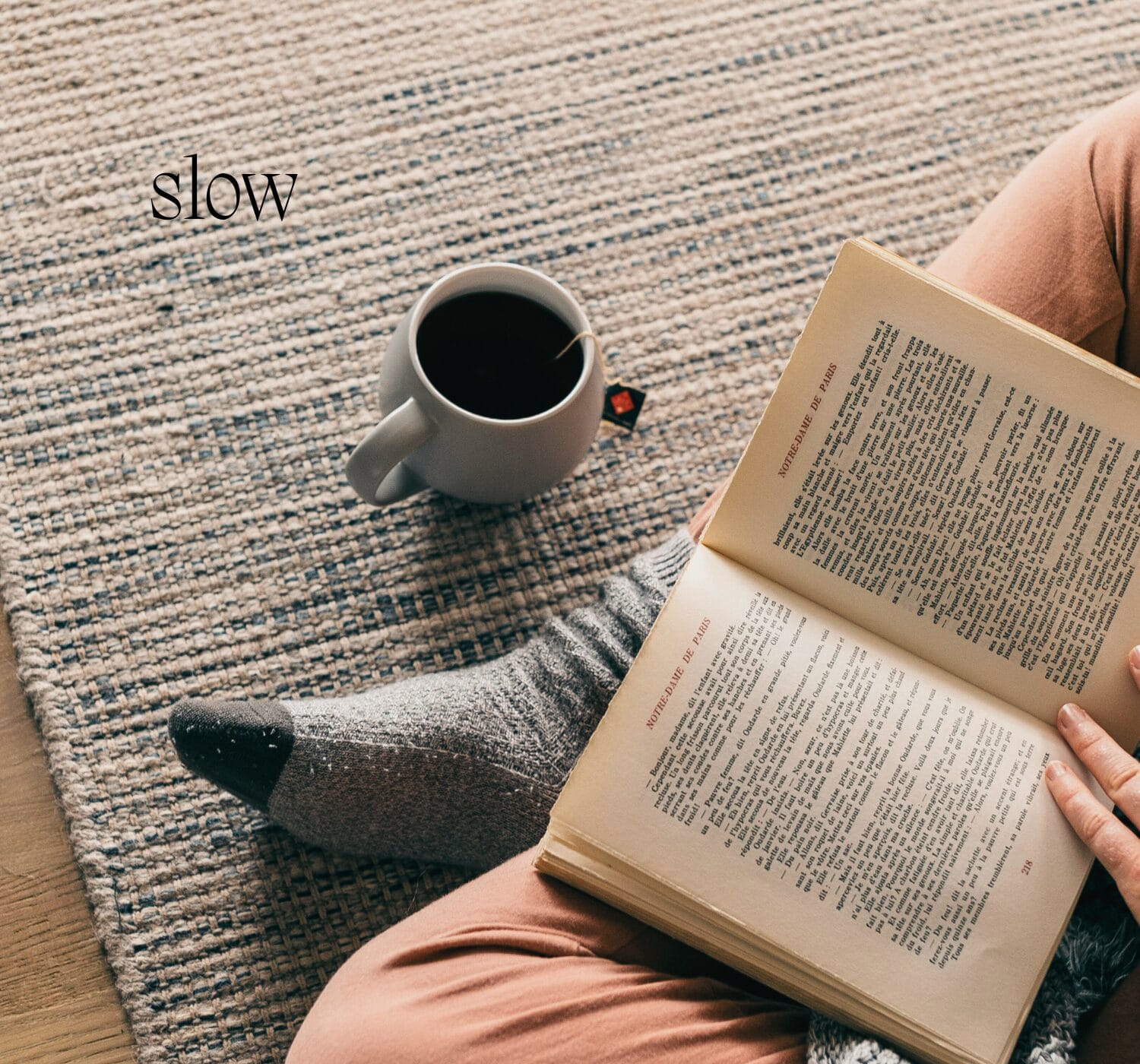
The Emotional Benefits of Slow Living:
May 7, 2025

There’s a moment many of us know too well: you’re brushing your teeth while mentally writing an email, replaying a conversation from earlier, and worrying about tomorrow—all at once. Life is technically happening, but you’re not really there.
I used to live like that every day—rushing from one task to the next, feeling proud of my packed to-do list. Until my body and mind started quietly pushing back. Anxiety, tension, and exhaustion became my constant companions.
Slow living begins as a gentle rebellion against that feeling. It’s not about doing less for the sake of aesthetics or moving to the countryside (though that can be lovely). At its core, slow living is about aligning how you spend your time and energy with what truly makes life feel meaningful, calm, and alive.
“Slow living isn’t laziness. It’s liberation.”
IN THIS ARTICLE
What Slow Living Really Means
Slow living doesn’t ask you to completely forget about ambition or modern life. It’s simply about paying attention.
It’s the practice of:
- Doing fewer things, more intentionally
- Creating space between stimulus and response
- Letting your nervous system feel safe enough to rest
In a loud crazy world we live in that quietly rewards urgency, slow living offers something else: permission to be human.
Why So Many of Us Feel Burned Out
Most people aren’t exhausted because they’re weak or unmotivated. They’re overstimulated and exhausted.
Our brains evolved for long walks, shared meals, daylight rhythms, and moments of boredom. Instead, we navigate constant notifications, infinite comparison, and the pressure to be productive at all times.
Slow living helps close the gap between the life our biology expects and the life we’re currently living.
“Busyness doesn’t equal worth. You’re allowed to pause. You’re allowed to live slower than everyone else.”

The Emotional Benefits of Slow Living
1. You Feel Less Anxious—and More Grounded
Slowing down signals to your body that it’s safe. Breathing deepens, thoughts settle, and you stop scanning for the next thing to fix.
Simple practices can be surprisingly emotional: walking without headphones, cooking one unrushed meal, or sitting with your coffee before checking your phone. They return you to yourself.
Try this micro-practice: tomorrow morning, spend one full minute noticing the aroma, taste, and warmth of your coffee—before opening your phone.
2. You Reconnect With What You Actually Want
Busyness can act like emotional noise. When life slows, clarity emerges.
People who adopt slow living often realize they don’t want more—they want enough: enough rest, enough connection, enough beauty threaded through ordinary days.
“When life slows down, you finally hear your own voice.”
3. Relationships Feel Deeper
Rushing weakens connection. Conversations become surface-level. Slow living creates margin for presence: you listen without waiting to respond, notice what isn’t being said, and stop performing to others’ expectations.
Micro-practice: tomorrow, during one conversation, try listening fully without thinking about your reply. Notice how it changes the interaction.
“Presence is one of the rarest gifts we can give someone—and slow living lets you give it freely.”

The Mental and Physical Health Benefits
Slowing down supports your nervous system, which in turn supports nearly every system in your body. Research shows benefits including:
- Lower stress levels (Harvard Health)
- Improved focus and memory
- Better sleep quality (American Academy of Sleep Medicine)
- Reduced risk of burnout
Small changes—like slowing your morning routine or taking intentional breaks—can improve mental clarity, digestion, and even heart health.
“Your body remembers calm. Give it a chance to feel safe again.”
Slow Living and Productivity (Yes, Really)
One of the biggest myths is that slowing down makes you less effective. In reality, it often does the opposite.
When you remove unnecessary urgency, you:
- Make better decisions
- Work with more creativity
- Waste less energy on context-switching
The result isn’t laziness—it’s sustainable momentum.
How to Start Slow Living
(Without Changing Your Whole Life)
Slow living isn’t all or nothing. It starts with tiny, human-centered choices:
- Start your morning without your phone for ten minutes
- Protect one daily ritual, even if it’s small
- Leave space between commitments
- Let one thing be good enough instead of perfect
Bonus micro-practice: write down one thing you felt grateful for today—even if it’s tiny. Over time, these small pauses add up.
Why Slow Living Resonates So Deeply
Slow living speaks to a quiet longing many of us carry: the desire to feel calm, connected, and at home in our own lives.
It reminds us that we are not machines built for constant output. We are humans built for rhythm, meaning, and care.
“You stop chasing joy. Instead, it finds you in ordinary moments.”
Life doesn’t have to be fast to be full. Slow living says:
- Your worth isn’t tied to productivity
- Joy doesn’t need to be earned
- You don’t need to fix or prove everything
You have the right to slow down. To savor. To breathe. To be present.
“When you slow down, you don’t miss life. You finally arrive in it.”

References
cover photo by Rachel Claire on Pexels.
Discover more from The Unscripted Femme
Subscribe to get the latest posts sent to your email.