
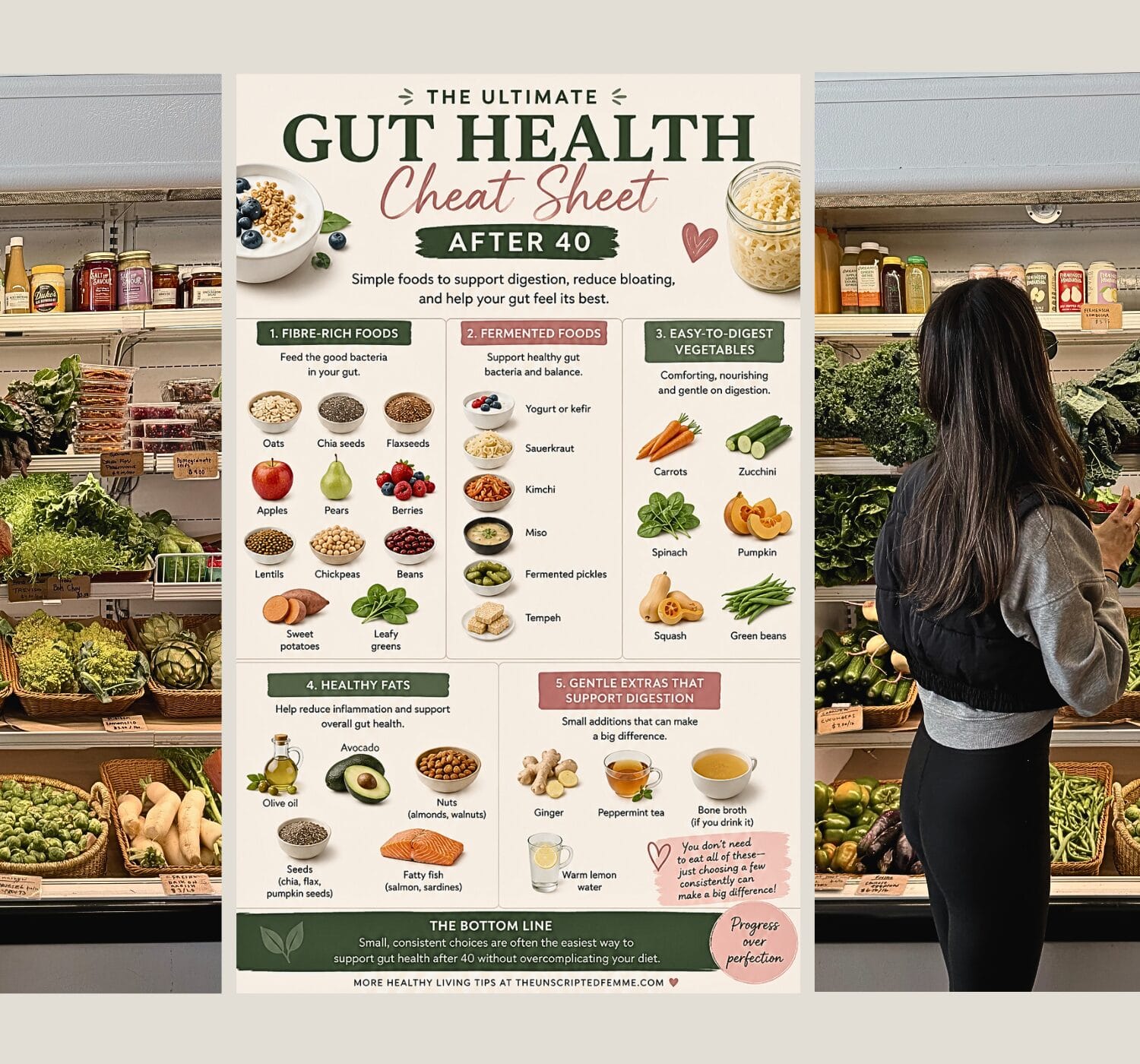
A simple, personal guide to improving gut health after 40, including easy foods, gentle habits, and research-backed tips to support better digestion and reduce bloating.
July 2, 2026 | The Unscripted Femme
At some point after 40, a lot of women start noticing something a little off with digestion.
For me, it started subtly. Foods I used to eat without thinking suddenly felt heavier. Bloating showed up more often. My energy felt a little lower. It was all enough for me to start paying attention.
And I’ve since learned this is actually pretty common. Research suggests that the balance of bacteria in our gut naturally shifts with age, and hormone changes during perimenopause can also play a role in how we digest and tolerate certain foods. And yes—perimenopause can begin in your 40s, which I didn’t fully realize until I started experiencing changes myself.
Looking back, it explains a lot.
The good news is, this doesn’t usually mean something is wrong. It often just means your body needs a little more support than it used to.
And thankfully, that support doesn’t have to be complicated.
In This Article: Best Foods for Get Health After 40
Why Gut Health Changes After 40
Our gut naturally changes as we age. The balance of bacteria shifts over time, which can influence digestion, how we process food, and even how energetic we feel.
At the same time, hormonal changes during perimenopause and menopause can affect digestion in ways we don’t always expect. Some foods that used to feel totally fine may suddenly feel a bit heavier or harder to tolerate.
All of this can show up in small, everyday ways, like:
- Feeling bloated after meals
- Digestion feeling slower than usual
- Certain foods not sitting quite right anymore
- A more sensitive or “off” feeling in the stomach
These changes can feel frustrating, but they’re often just your body adjusting—not a sign that something is wrong.
Signs Your Gut May Need Support
Sometimes the changes are gradual, so it’s easy to brush them off at first. But over time, you might notice:
- Bloating or discomfort after eating
- Lower or inconsistent energy levels
- Changes in digestion or regularity
- New food sensitivities
- A general feeling that something feels “off” after meals
None of these are automatic red flags on their own, but together they can be a sign your gut could use a bit more support than before.
How to Improve Gut Health After 40
The good news is you don’t need a perfect diet or anything complicated.
In most cases, it’s not about doing everything differently—it’s about making a few small, consistent changes your body can actually work with over time.

Best Foods for Gut Health After 40
1. Yogurt or kefir (if you tolerate dairy)
These contain probiotics, which help support healthy gut bacteria.
Research shows fermented foods may help maintain a healthier balance of gut bacteria over time.
If dairy doesn’t work for you, lactose-free or non-dairy fermented options can be a good alternative.
2. Fibre-rich foods (but slowly)
Your gut loves fibre—but it works best when you increase it gradually.
Some easy options include:
- Oats
- Chia seeds
- Apples
- Berries
- Lentils
- Vegetables
If your digestion feels sensitive, start small. Too much fibre too quickly can actually increase bloating.
3. Fermented foods
These help support beneficial gut bacteria.
Try:
- Sauerkraut
- Kimchi
- Naturally fermented pickles
- Miso
Even small servings can make a difference over time.
4. Cooked vegetables (gentler on digestion)
When my digestion feels off, I always find cooked vegetables easier than raw ones.
Cooking helps soften fibre, making them gentler on the stomach.
Good options include:
- Carrots
- Zucchini
- Spinach
- Sweet potato
5. Healthy fats
Healthy fats support digestion and may help reduce inflammation.
Easy ways to include them:
- Olive oil on vegetables
- Avocado with meals
- Nuts and seeds
- Salmon once or twice a week
Quick Cheat Sheet (Save This)…
Here’s a simple summary of the best gut-supporting foods if you want an easy reference without scrolling back up.

Foods and Habits That May Not Help Your Gut
This isn’t about restriction—just awareness.
Some things that can make digestion feel harder for some people include:
- Highly processed foods
- Excess sugar
- Heavy fried foods
- Too much caffeine on an empty stomach
- Eating too quickly or while stressed
Sometimes it’s not just what you eat, but how you’re eating it.
Stress, rushing, and irregular eating patterns can all affect digestion more than we realize.

Simple Habits That Support Digestion
Food matters, but daily habits matter just as much.
A few small changes that can help:
- Eating more slowly and without rushing
- Drinking enough water throughout the day
- Taking a short walk after meals
- Eating balanced meals instead of skipping and overeating later
- Trying to eat in a calmer, more relaxed state when possible
The connection between stress and digestion is real—when life feels rushed, our gut often reflects that.
I’m still working on this myself, but slowing down at meals has made a noticeable difference.
And interestingly, these small shifts don’t just affect digestion—they can also influence how strong and balanced you feel overall after 40.
Quick Gut Health Cheat Sheet
Here’s a simple reference if you don’t want to scroll back up:
Best gut-supporting foods:
- Fermented foods (yogurt, kefir, kimchi)
- Fibre-rich foods (oats, berries, lentils)
- Cooked vegetables (carrots, zucchini, spinach)
- Healthy fats (olive oil, avocado, salmon)
Simple daily habits:
- Eat slowly
- Stay hydrated
- Walk after meals
- Reduce stress while eating when possible
Gut health after 40 isn’t about perfection or cutting out everything you enjoy.
It’s really about making a few small changes that help your body feel more like itself again.
For me, that looked like:
- Eating more whole foods
- Adding gut-supportive foods regularly
- Paying closer attention to how my body responds
And that was enough.
The surprising part is that the smallest changes often make the biggest difference.
Most people notice improvements within a couple of weeks, but it’s not about speed—it’s about consistency.
And once it starts to feel better, it becomes much easier to keep going.
References
Cover photo by LI ANNE HARRIS | Dupe.
Discover more from The Unscripted Femme
Subscribe to get the latest posts sent to your email.