
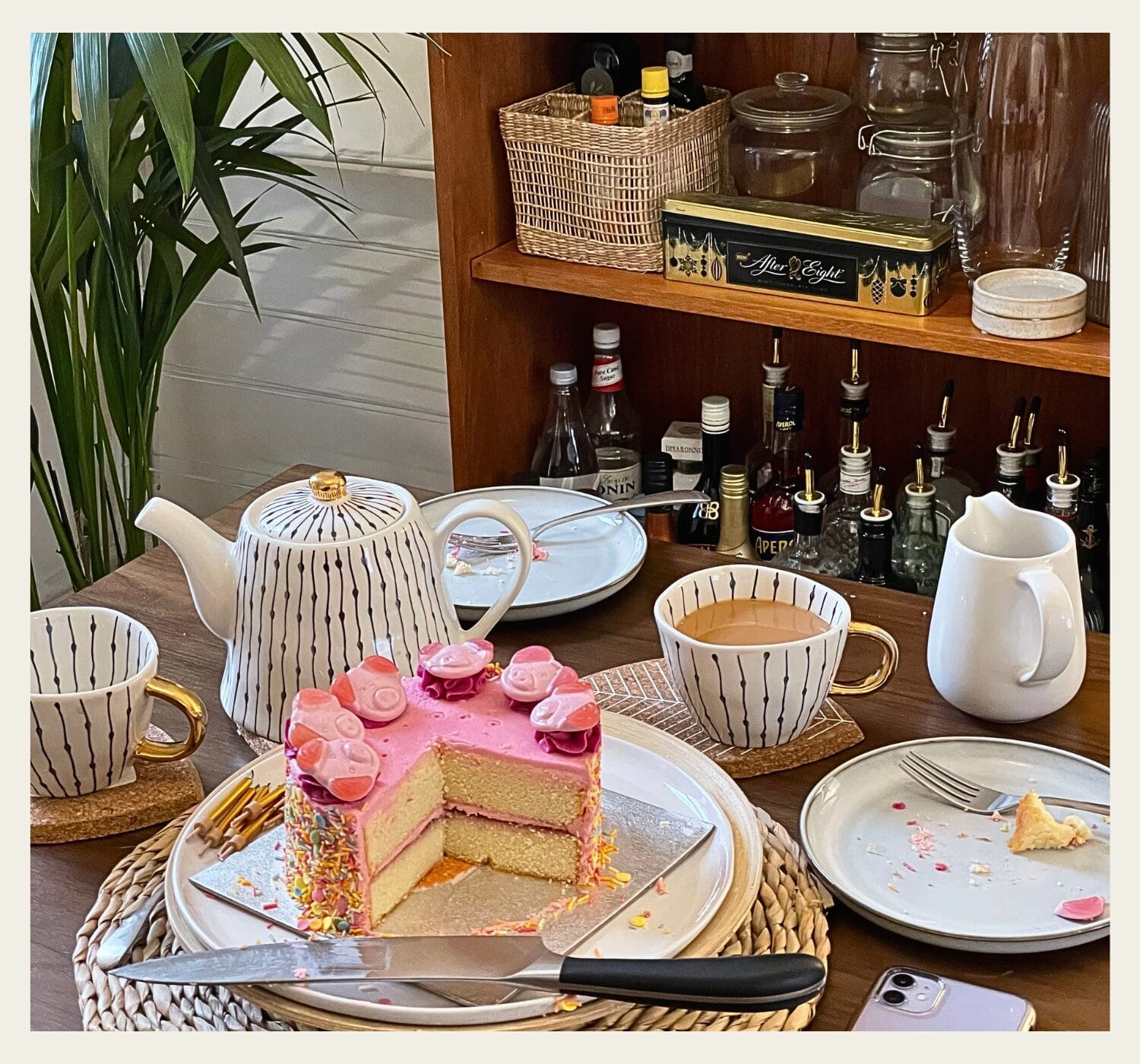
What makes a home feel emotionally safe? I’ve been thinking about the little things that help us relax, feel at ease, and settle into someone else’s home.
April 3, 2026 | The Unscripted Femme
Not long ago, I was sitting in a friend’s kitchen when her teenage son wandered in, opened the fridge, grabbed a pickle, and immediately started telling us about a disaster at school.
No greeting, just straight into the story.
Later, driving home, I realized what I loved about that moment: he felt completely comfortable there.
That’s the thing about emotionally safe homes. They aren’t always the prettiest homes. They aren’t the homes with the perfect paint colors or matching throw pillows. They’re the homes where people can show up exactly as they are.
And honestly? Those places tend to be unforgettable.

The Sound of Someone Saying, “Come In”
My grandparents never locked their back door during the day.
I don’t necessarily recommend that in 2026, but I do think there’s something beautiful about the feeling behind it.
Some emotionally safe homes have an invisible sign that says:
“You’re welcome here.”
It’s in the way people greet you. It’s in the lack of formality. It’s in being offered tea before you’re offered a tour of the house.
The safest homes don’t make you feel like a guest. They make you feel like you belong.

A Chair That’s Allowed to Be Sat In
Have you ever visited a house where every pillow looks like it was arranged by a museum curator? My husband loves that kind of thing, while I tend to be a little more relaxed.
In those homes, you almost become aware of every move you make. You hesitate before sitting down and start wondering where your elbows are supposed to go.
Then there are homes where someone says, “Move the laundry if you need a spot.”
Oddly enough, the second kind feels more luxurious.
A slightly worn couch. A blanket thrown over an armrest. A chair that’s clearly survived hundreds of conversations.
These things quietly communicate:
“Life happens here.”
The Smell of Something Familiar
Whenever I visit my parents, the house smells exactly the same.
I couldn’t describe the scent if you paid me.
Part coffee. Part laundry. Part mystery.
But the second I walk through the door, my nervous system seems to recognize it.
Scientists talk about how smell is strongly tied to memory, but most of us already know this from experience. One whiff of cinnamon, sunscreen, or fresh bread and suddenly you’re ten years old again.
The best emotional safe homes often have a scent that says, “You’ve been here before.”

The Freedom to Be Weird
One of my favourite homes belongs to a family who keeps a giant Christmas tree in their living room year-round.
Not for any real reason. Not ironically. Just because they like it.
Every time I visit, someone ends up laughing.
There seems to be a connection between emotional safety and harmless weirdness.
The homes that feel safest rarely feel performative.
They contain collections, hobbies, crooked family photos, half-finished puzzles, and stories.
They’re personalized instead of perfected.
A Kitchen People Naturally Gather In
Have you noticed that guests almost always end up in the kitchen?
Even when there’s a perfectly good living room ten feet away?
Anthropologists should study this.
You can spend thousands creating a beautiful dining room, and everyone will still stand around the kitchen island eating chips.
Something about kitchens feels reassuring. They’re where people make coffee, slice birthday cake, complain about work, and ask the important question:
“Should we order another pizza?”
The heart of many emotionally safe homes isn’t a room.
It’s wherever people naturally gather.
Being Allowed to Change Your Mind
This one isn’t about furniture.
It’s about atmosphere.
Emotionally safe homes allow people to change their minds.
To say:
“I was wrong.”
“I don’t know.”
“I’m having a hard day.”
“I need a minute.”
There’s no pressure to perform happiness.
No requirement to be impressive.
Just space to be human.
And that’s a gift.

Tiny Rituals
Every family has them.
Friday movie night. Sunday pancakes. Tea before bed. A dog that insists on greeting everyone at the door.
The rituals themselves aren’t important.
What’s important is the predictability.
In a world that changes constantly, familiar routines tell us:
“You know what comes next.”
That’s surprisingly comforting.
Good Lighting Solves More Problems Than It Should
I have absolutely no scientific evidence for this, but I firmly believe many life problems look less intimidating under a lamp than under an overhead light.
Warm lighting makes conversations linger.
It softens the edges of difficult days.
It convinces you that maybe everything is going to work out after all.
Or at least that you should have another cookie before deciding.

The Best Emotionally Safe Homes Feel Lived In
There’s a quote from William Morris that people often paraphrase as:
“Have nothing in your house that you do not know to be useful or believe to be beautiful.”
I would add one more thing:
Or something that holds a story.
The mug from a road trip.
The dent in the table from a family game night.
The dog-eared cookbook that’s somehow held together for twenty years.
Those details become part of a home’s personality.
The objects we keep aren’t usually valuable because of what they cost—they’re valuable because they remind us of people, places, and moments we’d like to hold onto.
Places That Feel Emotionally Safe
A few places many people associate with emotional safety:
- A grandmother’s kitchen.
- A favorite independent bookstore.
- A cabin during a rainstorm.
- A coffee shop where the staff recognizes you.
- A porch on a summer evening.
- A library on a quiet afternoon.
- The passenger seat during a long drive with someone you trust.
- A friend’s couch where you’ve cried at least once.
Interestingly, most of these places have very little to do with design.
They’re about feeling accepted.

Maybe That’s What Home Really Means
When people talk about creating a cozy home, they often focus on decor.
Blankets.
Candles.
Paint colors.
And those things are lovely.
But the homes we remember most tend to offer something deeper.
Permission to relax.
Permission to be ourselves.
Permission to show up messy, tired, uncertain, excited, awkward, joyful, or all of those things at once.
Maybe an emotionally safe home isn’t a place that looks perfect.
Maybe it’s a place where nobody expects you to be anything other than yourself.
References
Cover photo by Michaela Roy | Dupe.
Discover more from The Unscripted Femme
Subscribe to get the latest posts sent to your email.